No.1: Asia's tiniest frog (Microphyla nepenthicola)
- Adult measures 10.6mm to 12.8mm long
- Tadpoles grow in water collected inside the pitcher plant
- Found in Sarawak, Borneo
- This 2cm long frog has deep purple skin speckled with small blue blotches
- The color and shape of its head resembles the dead leaves on which it lives
- Found in Choco, Colombia
No.3 : Chalazodes Bubble-nest Frog
- Last seen: 1874
- Found in India
- Critically endangered
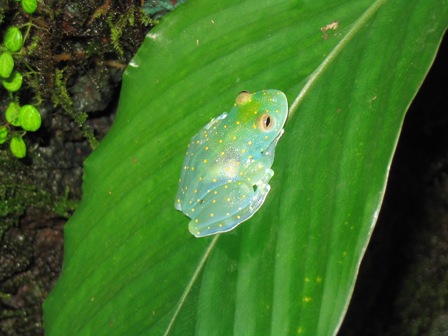
- It has a unique fluorescent green body with ash-blue thighs and groins
No.4 : Glass/Crystal Frog (Mr. "Nothing-to-hide)
- Endangered
- Named for its translucent body
- More than 150 species of glass frogs reside in cloud forests in Central and South America.
No.5 : Wood Frog (Mr. "Freeze & Thaw")
- Least concern
- It creates an antifreeze like solution in its blood to literally freeze in winter
- The minimum survival temperature is -4 to -5 deg C
- When spring arrives, the frog thaws and its heart starts pumping again and it is revived-- unharmed
